

The British Commentariat: Why can’t we have political leaders who take the time to make the case to the public about difficult issues?
Also the British Commentariat: Why isn’t [Person X] ahead in the polls right now?
A significant gap has opened up in polls asking what people think of Kemi Badenoch (up significantly) and the Conservative Party’s own polling, which is still stuck in the doldrums at just under 20%.
Over the last couple of weeks there have been a number of pieces written by people over what this means for Kemi Badenoch. You can read a bullish case, by Adrian Wooldridge or a more bearish case, by Sam Freedman.
What you’ll get here is a cautious case: not arguing that Kemi is on an inevitable path to victory, but rather that she might be - and that the ground-work she is laying is putting the Conservatives in a better place to build from than more casual observers might anticipate.
Firstly, though, let us clear the air and acknowledge that the Conservatives are not, right now, doing well.1
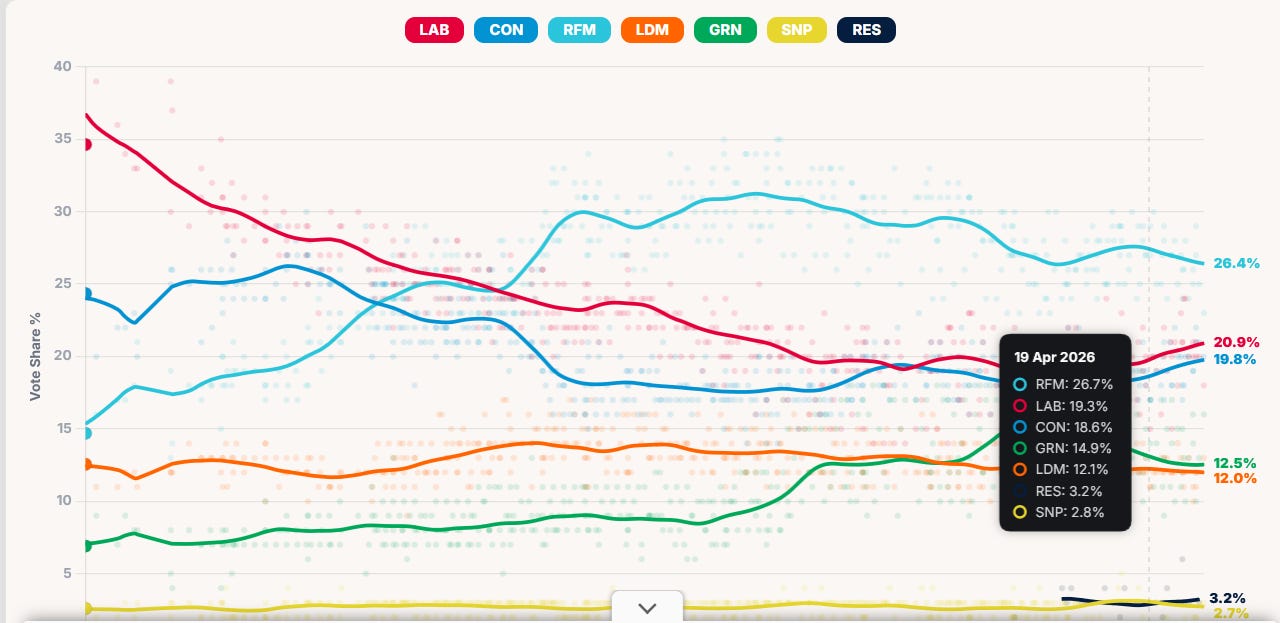
These headline polling figures are borne out by terrible results at the last two sets of local elections, and reinforced by qualitative data from almost every focus group. Two years after the last general election, many people have still to forgive the Tories, and/or fail to see them as answer for the challenges facing the country.
But we don’t care what the polls say now, we care what they will say in 2-3 years’ time.2 And we all know that to do that, we need to look at not just how things are now, but how they are changing - and how that in turn might change in the future:3
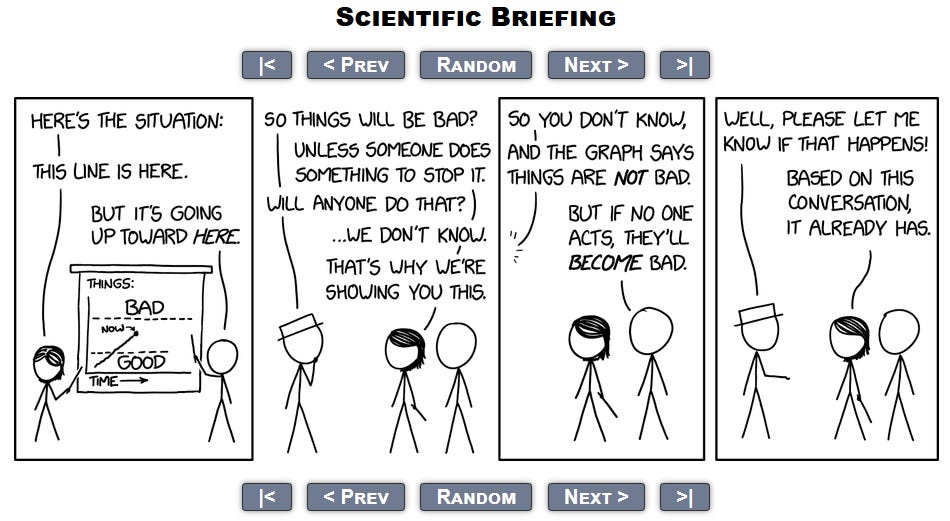
So what reasons do we have for thinking that the Conservative’s fortunes might improve? After first setting out expectations, we’ll then look at the cautious case for Kemi - before going on to look at what could still blow it off track (plenty!) and areas where they could be doing more to gain an advantage.
Setting our expectations
But first, what does ‘good’ look like? Perhaps history can give us a clue:
After 1979, Labour did not regain power for 18 years and four general elections.
After 1997, the Tories did not regain power for 13 years and three general elections
After 2010, Labour did not regain power for 14 years and four general elections.4
To put it bluntly, we shouldn’t see ‘not winning in 2029’ as a reasonable measure of failure for the current leadership.5 Clearly, winning is the best - but increasing seats and vote share - say to 180 seats - would also be clear progress. This would particularly be the case if this resulted in a hung Parliament (perhaps with Reform the largest party, on 200-250), or a fragile ‘Rainbow’ coalition on the left.6
On current polling, the Tories are not on track for that - and it’s where, at the minimum, they need to be.
But wait a minute: the Conservatives were in an unusually terrible position in 2024 - worse, I would argue, than Labour in 2010 or the Conservatives in 1997; perhaps Labour in 1979 comes close, facing as they did both a parlous country and, soon, a new challenger party in their space.7
They had just faced two major external events - the Covid-19 Pandemic and the energy price shock caused by the Russia-Ukraine war - the combination of which pummelled incumbents almost everywhere. Partygate had destroyed their reputation for probity and, even more damagingly, Truss had blown up their reputation for economic competence. The country were sick of them - and having been in power for 14 years, laid the country’s travails squarely at their feet.
What is more, the years from 2016 to 2024 had been an unequivocal disaster for the right.
I am not a purist - there are many ways to run a successful party on the right. Cameron effectively combined free market economics, cutting spending and pro-choice public service reform with social liberalism; in other countries and at other times the right has focused on cutting crime, controlling the borders or social conservatism.
But in 2024, delivering Brexit aside, the Conservatives had failed on every possible right-wing success criteria - all the while using inflammatory rhetoric which alienated many moderates. As Kemi herself has put it, they ‘talked right and governed left’.
Public spending, tax and the national debt had risen massively, as had the number of welfare claimants. Legal and illegal immigration had both surged to record levels, they had lost control of the Channel border and the courts were in crisis.8 Trans ideology and critical race theory were embedded in both the schools system and public sector organisations, museums and curricula were being ‘decolonised’. The armed forces had been cut to the bone. The regulatory burden on business had steadily piled up, the planning system moved at a snail’s pace and the Government was steadily rolling out new regulatory measures, from the smoking ban to a football regulator.9
As I satirically wrote the day after an election, could a Labour government possibly be worse?10
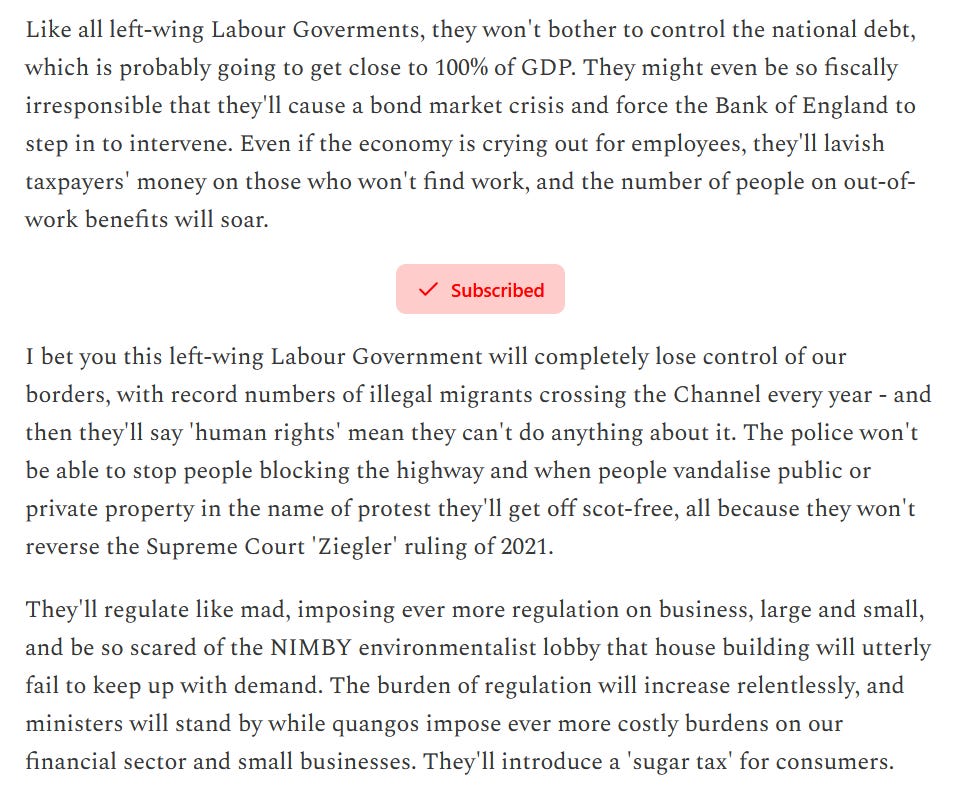
The surprise is not that a right-wing challenger party emerged; the surprise is that it did not do so sooner. Similarly on their left-flank: much has been written on how Brexit, or opposing ‘woke’, or the Rwanda plan pushed wealthier, graduate voters to the Lib Dems - and this is true - but not enough has been written about the fact that there was no countervailing pull on the economic side. Why vote for a party that has increased your taxes, taken away your child benefit and placed you in student debt - meaning the perceived cost of voting your values with the Lib Dems, Green or Labour is nothing?11
Furthermore, the party itself was hopelessly split:12 shortly before Sunak called the election, he was facing open revolt not just from backbenchers, but from cabinet members, over proposed curbs to student migration that were more moderate than those Labour would introduce a year later, while the party’s right divided into a bizarre ‘Five Families’, the divisions between which one had to squint to see.
All of this presented a monumental challenge for any new leader: not just earning back a hearing from the public, but healing the divisions in a way which could actually underpin a coherent platform for government was a monumental task.
And has Kemi done that?
Again, some honesty: the first 8 months were not a success. Her leader approval ratings steadily declined as the party stuttered like a broken-down car trying to get into motion. Being a party leader is hard - much harder than the job of a Cabinet Minister.
But over that first summer she recovered her mojo, re-organised her team and at some point - perhaps Party Conference, perhaps the response to Reeves’s tax-and-borrow Budget - she began to turn things round.
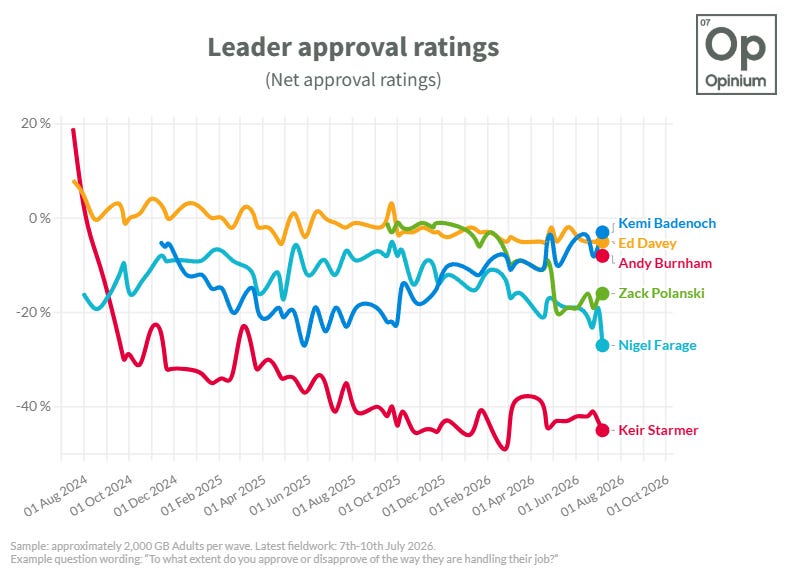
Her popularity is now consistently well above those of all other leaders except Ed Davey.
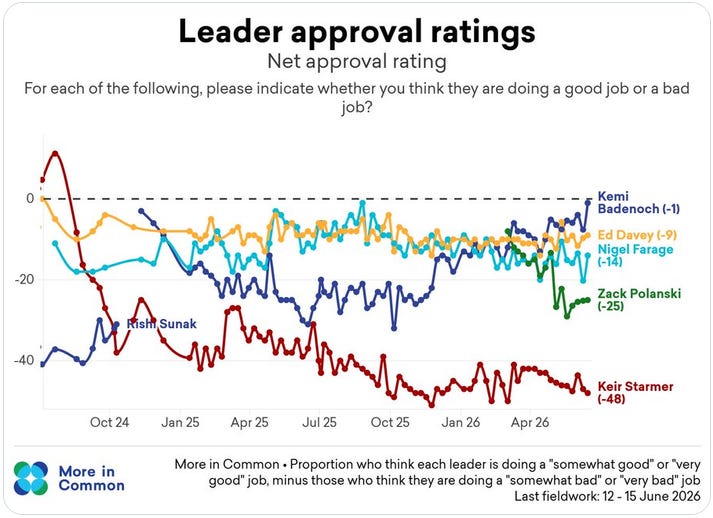
When we include Andy Burnham things get a lot closer:
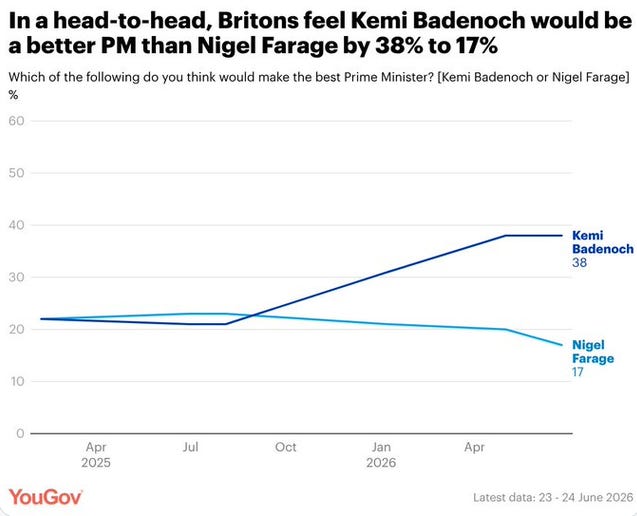
And in a head-to-head against Farage, Kemi comes out on top:
She is getting consistently better at the ‘set-pieces’ required of the Leader of the Opposition, such as Prime Minister’s Questions, and has grown better at media interviews, as well as producing the clips that get shared on social media. Focus groups typically report that people like what they see of her, though aren’t always sure what she stands for while, anecdotally, less political friends say they see far more of her coming through on Facebook, Instagram and similar - and that they often like what they see.
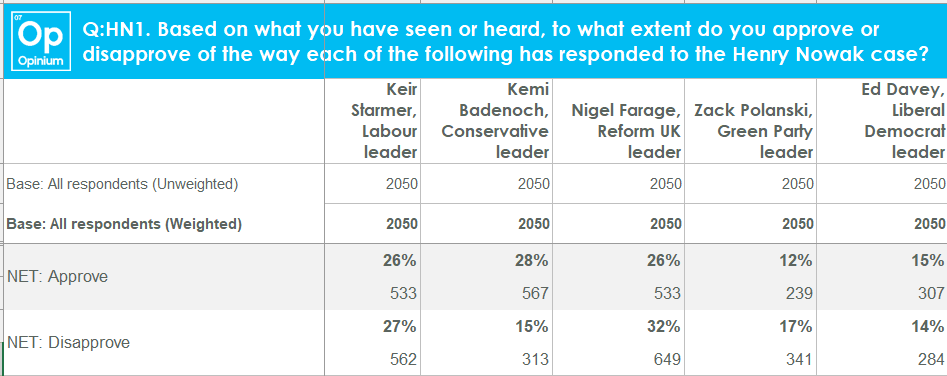
There are still occasional missteps - the most recent significant one was over the Iran war - but these are becoming less and less frequent. After the recent tragic murder of Henry Nowak, Kemi’s clearly articulated compassion for the family and support for equality before the law received the highest approval from the public, ahead of Starmer’s muddled defence of the status quo, while Farage’s attempt to invoke white victimhood came last.
So far, this hasn’t translated to an improvement in the polls. But leader approval rating is an important leading indicator - so it’s an important clue that while the Tories aren’t up now, they might be.
The other traditional indicator of future victory is trust in the economy - and here again the Conservatives are ahead, though not as much as they’d ideally like to be. You can see clearly the Truss Minibudget, where Labour shot ahead, and then the long-slow slog of gradual Tory recovery.
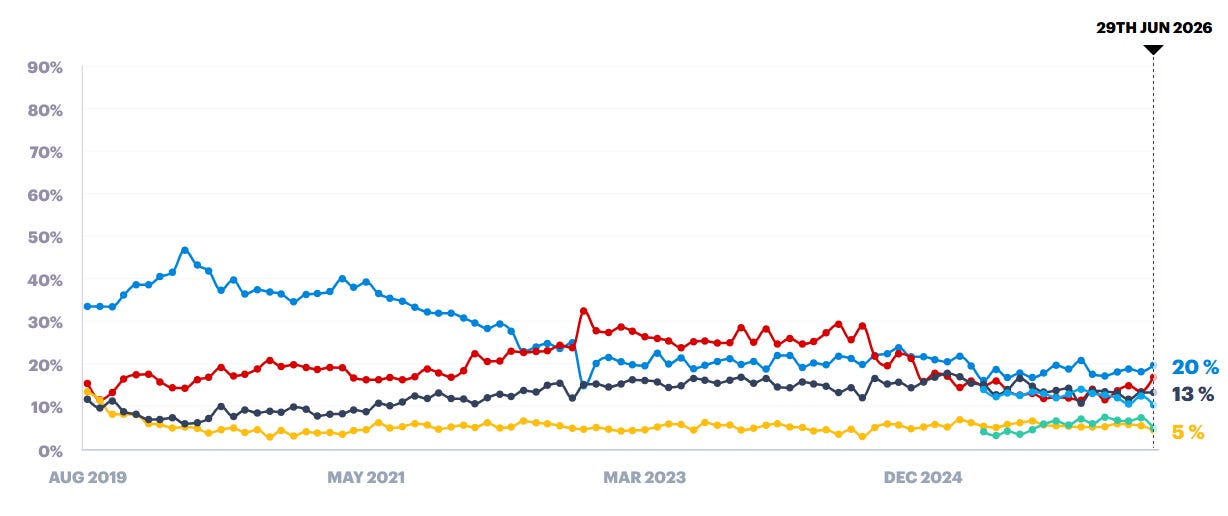
So why aren’t these indicators translating into Tory polling numbers - and why might we believe they could in the future?
The answer to both questions is time. It’s only just over two years since the Tories were voted out of office - and as we saw above, there’s a lot to forgive. It’s less than a year since Kemi started performing more strongly. These things take time to trickle through.
Similarly, public opinion tends to be thermostatic - shifting to the right under a left-wing Government and vice-versa. This can be seen in the vote share of the ‘right bloc’ vs the ‘left bloc’ - where the right’s lead has gone from -17 at the last General Election to +3.7 today.13 Similarly, as Peter Kellner writes, a recent poll by Norstat found that 13% of ‘left’ voters from the 2024 election have moved to the right, while only 4% of ‘right’ voters have moved to the left.
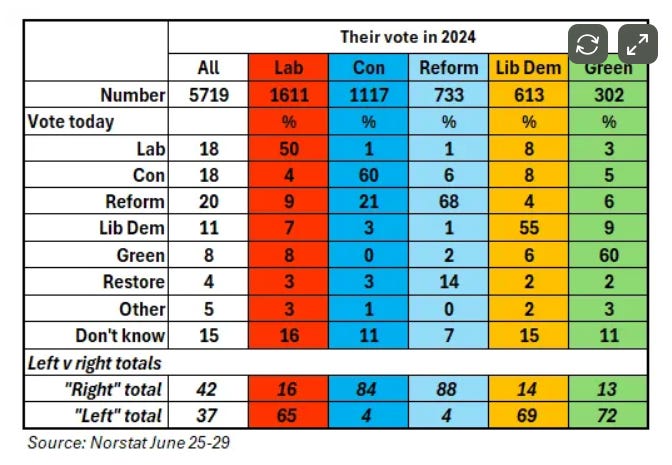
But why might we think a continued thermostatic effect would benefit the Tories, rather than Reform? There are three principal reasons: the economy, immigration, and Reform’s travails.
On the economy, we’ve seen a major shift in how the public is thinking about tax and spend - an area where the Tories have an advantage over Reform. In 2019, voters on balance thought taxes were too low and we spent too little on public services, now the balance has swung decisively in favour of taxing and spending too much.14 Indications are that Burnham will shift to the left, and with deteriorating OBR forecasts, we can expect the next two Budgets - just as the last two did - to involve coming to the public for large, tax rises, likely to be in the tens of billions. The Conservatives are best placed to capitalise.
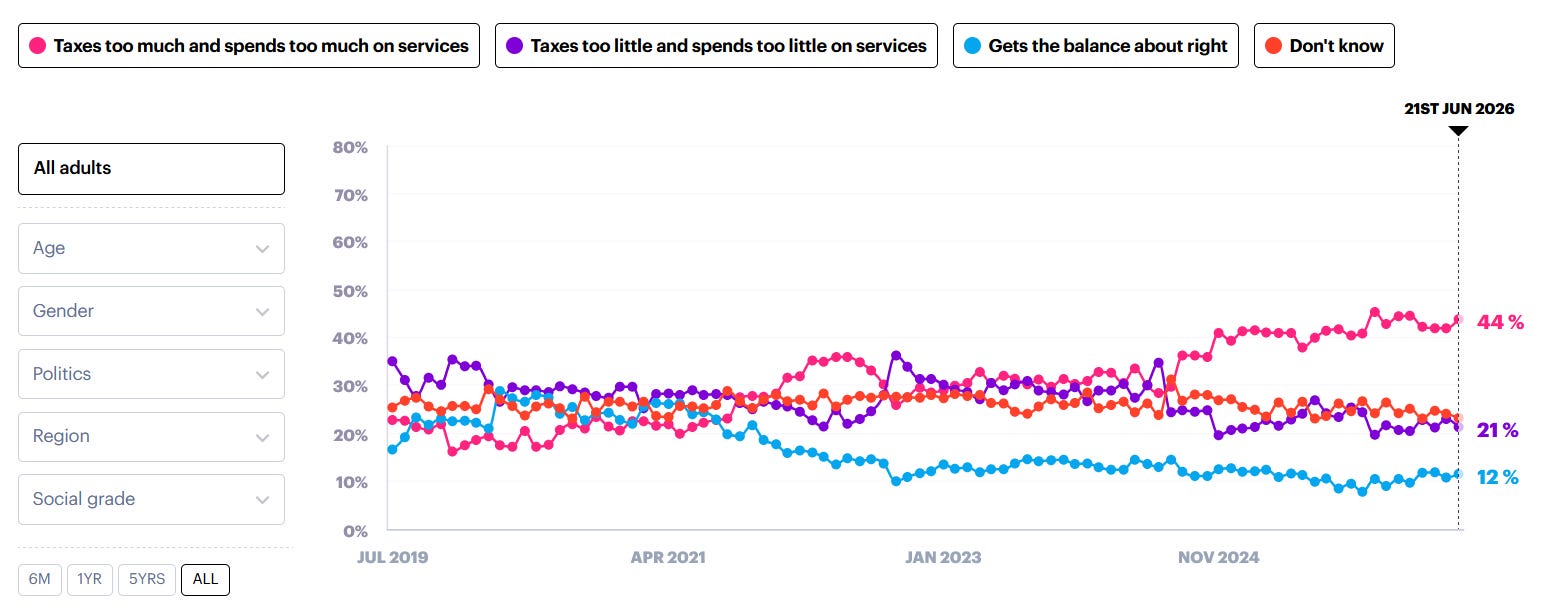
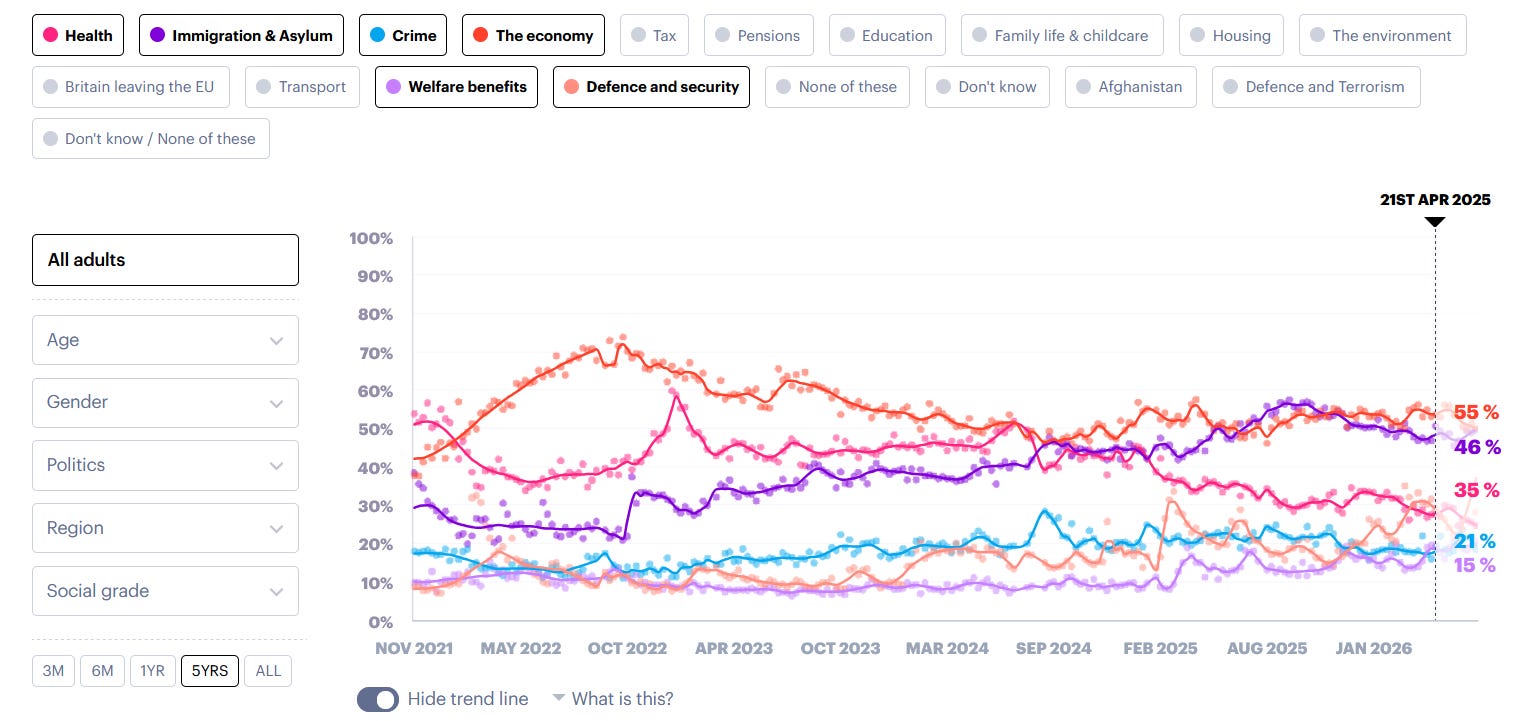
Regarding immigration, net migration has fallen to below 200,000 and is forecast to fall further. Rather like inflation, falling migration doesn’t immediately ameliorate public concerns - the new immigrants, like the higher prices, are after all still here. But over time, concern over migration does tend to be a lagging indicator of net migration levels15 - and, indeed, we can see it falling from its peak in the YouGov tracker. I would not over-egg this: the small boat crisis in the Channel and the inability to systematically deport violent criminals will prevent concerns over immigration falling too far, but the more it shifts from migration to the economy, the better for the Tories.
Finally, there are Reform’s own travails - where views are hardening against both them and Farage himself. The recent donation scandal is cutting through, including with Reform voters.16 Both polling on tactical voting and real evidence, both in Parliamentary by-elections and the local elections, suggests that Farage is a much more disliked figure, and that more voters will vote to keep out Reform - including, at times, for the Tories, than for the Conservatives.17
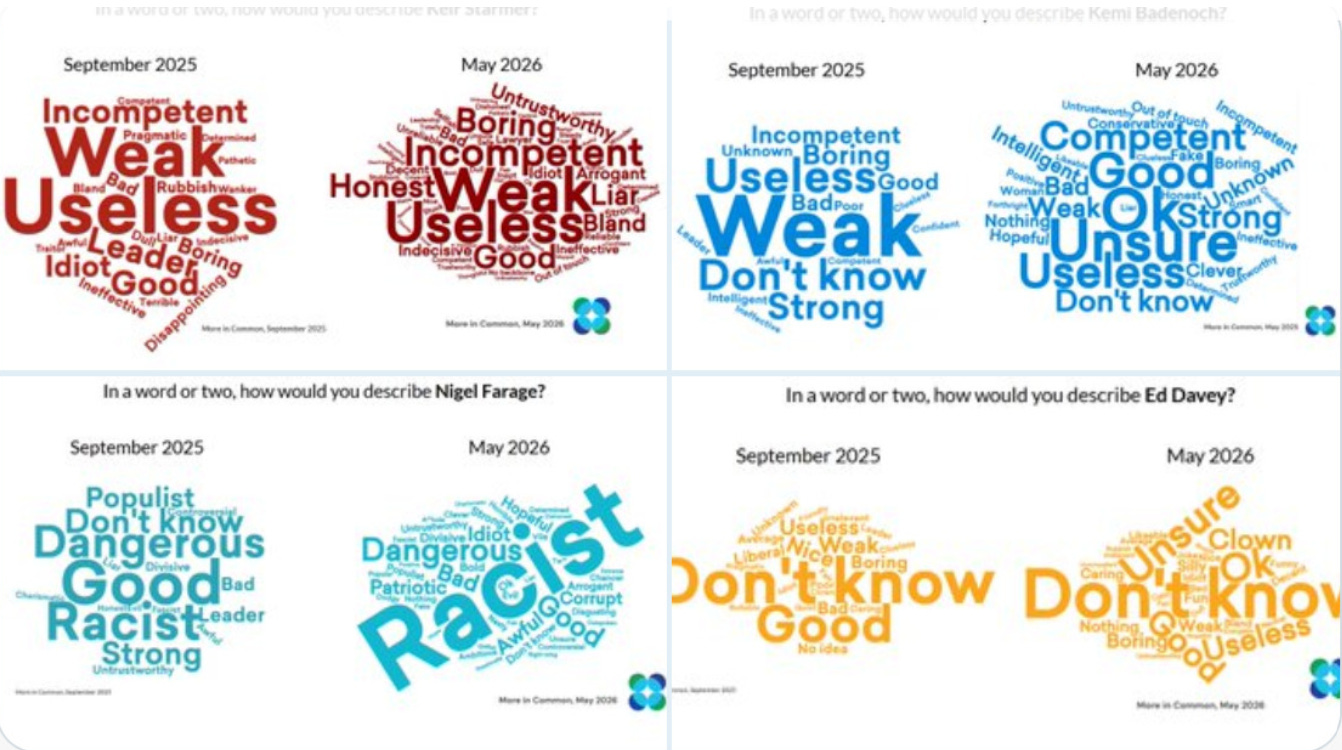
Of course, Reform are by no means out of the picture - but ‘Word Clouds’ taken last September and this May suggest that while Farage’s reputation is waning, Kemi’s is on the rise.
But perhaps most importantly, the case for Kemi rests on how she has transformed the Conservative Party. It is here where I most disagree with Sam Freedman:
“Badenoch has done nothing to structurally improve the Tory position. There is no policy agenda beyond pledges to undo Labour taxes rises by cutting welfare. Because the Tory leader seems animated almost entirely by hatred of Labour her positions are always about negating something they’re doing, whether on net zero or private school VAT, rather than setting out a positive agenda of her own.”
Adrian Wooldridge is closer to the mark, but even this doesn’t fully unpack the extent of the arduous groundwork that has been successfully undertaken:
“The second thing in Badenoch’s favor is her progress on the arduous job of repairing the Tory party after the Brexit disaster, as both a political outfit and ideological force. She has replaced a discredited gang of operatives in Conservative Campaign Headquarters with competent functionaries and is identifying a distinctive philosophy that addresses people’s worries about opportunity and immigration without being deliberately divisive.”
Britain’s Tories Think They’ve Found a Winner, Adrian Wooldridge
There are three fundamental ways in which Kemi has transformed the party, carrying out the painstaking but necessary work from which an electoral victory could be built.
In government, the Conservatives were drifting, hopelessly divided about what they wanted to achieve. On issue after issue they would will the ends but not the means: wanting to stop the Channel crossings but unwilling to leave the ECHR; railing against public sector wokery but unwilling to touch the Equality Act; wanting to lower taxes but refusing to touch benefits or public services; saying they wanted more people doing college courses and apprenticeships and fewer at university, but unwilling to contemplate restoring number controls.18 On each of these issues and more, Kemi has been willing to set out the means - leaving the ECHR, repealing the Public Sector Equality Duty, cutting welfare and reducing university places.19
She has done all of this while maintaining party unity. She has been helped, it is true, by the defection of her biggest rival, Robert Jenrick, to Reform - but it was still no easy task in a party that had previously been marked by constant schisms. More centrist MPs such as Jesse Norman have written publicly on why we must leave the ECHR, and it is notable that the ‘centre-right’ pressure group, Prosper UK - composed primarily of members who were strong Remain supporters - has failed to recruit a single MP. While she was heavily criticised for taking time to work through these issues, it is unclear whether she could have moved faster and taken the deeply divided party with her.20
She is carrying out significant, detailed, policy work on a wide range of issues - as represented, for example, by the Alternative King’s Speech or the recent paper on reforming the City of London. These are not reviews carried out by external parties, deniable and ignorable, but formal policy documents published by the party. They represent the beginning of a serious programme - and show that she does not just wish to win power, but to achieve something concrete if and when she arrives.
Look, I get that the ‘Ming Vase Strategy’ is all the rage these days. Never say anything that might upset anyone; be deliberately vague about trade-offs and promise nothing but platitudes. It successfully carried Boris Johnson,21 Keir Starmer and Andy Burnham into office. But however successful it may be as an electoral tactic, for governing it proved a foundation made of sand (we will see if Burnham can break the mould…).
It is also not the approach that was taken by the two most successful Conservative Prime Ministers of the last half century, Margaret Thatcher and David Cameron - who, in the midst of crisis, both actively campaigned for what they believed in, and persuaded the country it was necessary:
Effective leaders set out how the country needs to change - and take the country with them. And there is no point in winning power without a working plan to achieve something with it.
Headwinds and countermeasures
So is Kemi a sure thing? Far from it.
Reform continues to threaten to supplant them as the main party of the right. They may be taking knocks, but they’re still leading in the polls. Farage may be down, but he’s not out - and this is a politician with a twenty-year track record of resilience and rebounds, who can literally crawl from the wreckage of a plane crash and go on to dominate politics. Even if Reform has peaked - which should not be counted as certain - a Reform that squats stubbornly22 at 22-24% in the polls could prove fatal to Conservative ambitions.23
The 72 Liberal Democrat MPs have managed to have surprisingly little impact on national policies - but the Lib Dems are local campaigners par excellence, and they have been digging in to those constituencies they gained. Local election results confirm they are entrenching themselves. The Tories must take some of these back - and not enough focus has been given to this.
The biggest new threat to the Conservatives is Burnham, and whether he can change Labour’s fortune. His election is a double-edged sword: it is a second chance for Labour, but if it goes sour the electorate will be even less forgiving.24
I am pretty bearish on his chances: as said above, I do not see evidence he has the answers that will turn the country round, or to alter Labour’s economically harmful policies on higher taxes, damaging employment law and increased spending. As a result, I fully expect him to have to come back each Budget imposing unpopular and damaging taxes.25 But at the same time, he will almost certainly be better at core aspects of the job than Starmer was: building relationships with his MPs, communicating with the public, telling a story of what he is doing - and why.26 This matters - including in being able to get more through Parliament. So the Conservatives should not assume Labour will remain below 20% in the polls.
So it is not enough for the Conservatives to simply wait for Reform and Labour to implode (though this might help). They must do more to convert Kemi’s personal ratings into rising Conservative poll figures. To succeed they cannot choose either right or left; they must win back voters that have deserted the party to both Reform and to the Lib Dems or Labour.
I see three areas where they have the opportunity to be doing much more.27
Firstly, Kemi needs to get all of her best players on the front bench. Some individuals have succeeded in cutting through: Claire Coutinho, Nick Timothy, Andrew Griffith and Laura Trott have all had repeated successes. Behind the scenes, Neil O'Brien’s influence has massively upped their game on their policy announcements. But others are not making an impact.
Meanwhile there are too many top performers who are underused. Jeremy Hunt had great success in sticking it to Labour in his short stint as Shadow Chancellor - could he make a return, if not in that role, then in one of the other big economic portfolios, such as welfare or business? Tugendhat is highly respected on defence and foreign policy. Individuals from the newer intake, such as Katie Lam and Jack Rankin, could be given bigger roles.
This is not intended as a criticism of individuals: there are people who would be good ministers in government who are not as suited to the very different challenge of Opposition.28 At this stage in the electoral cycle Kemi knows who the high performers are, and should no longer be bound by other considerations, such as those who she owes a debt to from the leadership campaign.
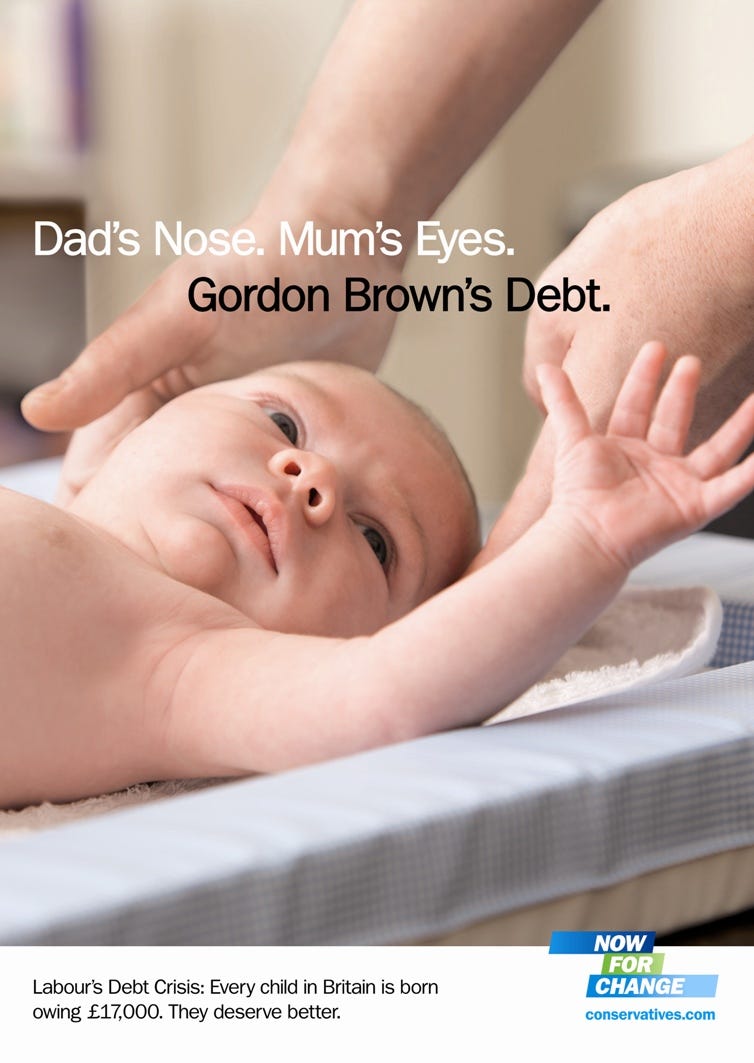
Secondly, they must be relentlessly hammering home the economic message: Labour is making you poorer. They cannot talk too much about jobs, tax and benefits - repeatedly linking Labour’s decisions to the cost of living, fall in jobs and increase in welfare claimants.29 Kemi’s strongest moment with the public was her response to Reeves’s Budget: this must be built on, and rammed home by every member of the Shadow Cabinet and every advert and communication. Where are the Indebted Baby pictures of yesteryear?
After their record in Government, it was essential that the Tories reset their reputation on immigration and other matters (wokery, etc.). The policies they’ve announced have done this - leaving the ECHR was a vital ‘permission issue’ that provides a core answer to the question, ‘Well, why should we believe you this time’? Repealing the Public Sector Equality Duty is similar. But now these are in place, they should not try to outflank Reform. To win vote share on the right - and win back waverers in the centre and left - they must maximise the salience of the issues they are strongest, which means jobs, tax and welfare, not issues such as immigration where Reform do better.30
Thirdly, they need a much stronger offer to middle class graduates with whom they may not be fully aligned on values. I don't mean BlueSkyers or Green party activists, but moderates, genuine centrists who either stayed home or voted Labour or Lib Dem in 2024.
These voters need to see clearly that they will be better off under the Conservatives: that they will pay less tax, have more disposable income, will find it easier to get a job and will earn more. And to be blunt, for the last 10 years that's not been true. The middle classes have been seen as the cash cow used to fund an ever-burgeoning benefits bill.
They've pledged to abolish interest on Plan 2 student loans - a good, symbolic start on an issue that affects millions. More is needed. I suggest:
Raising the higher rate threshold to £60,000 - worth £2k to every person earning £60k a year or more.
Ending the means-testing of child benefit.
Abolishing the removal of the personal allowance at £100k and the removal of free childcare.
Around 1 in 5 taxpayers pay the higher rate (and this will be a higher proportion of households) - and a much higher percentage of the graduate middle class they must win back. Far fewer earn over £100k - but many of them might hope to one day. Taken together - alongside the existing student loan pledge - they would combine immediate financial gains with a message that the Tory party is back on the side of aspiration.
A situation where most educated, higher earning people vote for parties in favour of large-scale redistribution is fundamentally unstable: the Tories just have to give them a reason to come back.
In reforming the party, addressing its baggage and strengthening her own reputation with the public, Kemi has laid the foundations for a Conservative revival. Now she must build on it.
Ultimately, I do not say it is inevitable that Kemi will win. Only that she might - and that she is the best chance the Tory party has of not just winning power, but knowing what to do with it if they get it.
The switch to five party politics - or seven, if you include the SNP and Plaid - makes it very easy to make technically true but actually misleading statements about polls. ‘The Tories are only a point behind Labour’ sounds great - until you realise it’s because they’re both on about 20%. ‘Reform are on 26%’ and ‘Reform are leading by 6%’ sound very different.
The reality is that it’s complex. Being on 20% - or even 25% - is a very bad place for either of the legacy parties to be - but, simultaneously, also a lot less bad in an environment where 30% might get a majority than it would have been back in the days of 2- or even 3- party politics.
In this piece I’ll be endeavouring to present all statistics fairly and in context, so that you can see the full picture, and draw your own conclusions where necessary.
Andy Burnham may care what the polls say now, if he is considering whether or not to call a snap General Election - which given where they stand, I very much doubt he will.
Though even in the most optimistic scenarios, the Conservative Party’s polling numbers are unlikely to enter an exponential growth phase.
Honestly, it felt like a lot more general elections than this.
Before anyone says this is a cop out, ‘going backwards’ in either vote share or seats, or ‘becoming purely a regional party’ absolutely would be a mark of failure.
Being the largest party in a hung Parliament would be even better.
But potentially not even that. The country was certainly in a bad state in 1979, but Labour had only been in office for five years and the public - rightly - recognised that many of the issues were ones that Heath had also failed to grapple with.
Some serious types of crime, such as murder, had actually fallen - but the visible lack of consequences - whether police action, swift-sentencing or jail time for crimes such as shop-lifting, burglary and phone snatching had an understandably corrosive impact on public opinion on crime, as these crimes are far more common.
Again, to be clear, I am not saying they had to succeed on all of these measures. But succeeding on none of them is not an option.
Two years on: yes.
Reader, it was not nothing.
The divisions caused by Brexit never truly healed.
I am excluding the SNP and Plaid here, as the independence movements confound the matter to an extent in Scotland and Wales; if you include them, this doesn’t substantively change the degree of shift.
These questions are notoriously sensitive to how the questions are asked; however, long-term trackers, where the same question is asked repeatedly over time, do show real shifts in public opinion.
See for example Public Attitudes to Immigration by Duffy and Frere Smith. The relationship appeared to decouple for a few years after the Brexit vote, but reasserted itself following the Boriswave.
It is a mistake to think that even the most ‘teflon’ characters cannot be damaged by anything - it is all about what is priced in. Boris was brought down by Partygate. Trump is being seriously damaged by the war with Iran - because unlike his personal conduct, his pledge to end ‘forever wars’ was one many of his supporters cared a lot about, and believed (with some reason, based on his first term) that he would fulfil. And a money scandal has the potential to damage Farage in the way that any number of stories about racist remarks he allegedly said at school will not.
This certainly hurts Reform, but there’s a limit to how much this helps the Conservatives. The effect gets weaker the less likely people think Reform are to win, so it will fade away in the event of the Tories really breaking through. But it could matter moderately in a Reform: 26 / Conservatives 23 type situation.
More on my own part in that last can be read here.
Set aside whether or not you think these are the right policies. They are necessary policies if the Conservatives are to achieve the objectives which they have consistently set out and campaigned on.
The slow initial policy process undoubtedly had a cost - it is during this period when Reform overtook the Conservatives in the polls. It is not clear whether she - or another leader - could have moved faster here; there would have been risks, but it might have been worth it. What is clear, however, is that the level of unity around the change needed is now embedded, and impressive.
Barring Brexit. Brexit was the sort of Ming Vase you find in Worms.
Like a toad? Alright, if you must, like a toad.
But is the ideal outcome for Burnham.
As we saw with the Tories under Sunak - from the public’s perspective, they’d have given Labour a chance twice and seen it fail both times.
Nor do I think he will solve the small boats crisis, build enough housing or improve the NHS enough to shift people’s perceptions.
I see a surprising number of people who argue that Starmer was particularly bad at the job of Prime Minister and simultaneously that Burnham will do no better.
This is an area where I am in more agreement with Sam.
I am fairly sure I would fall into this category.
As an aside, on energy, they should talk about cheaper energy costs rather than ditching Net Zero. The public - including most people on the right - are worried by climate change and want to do something about it; they dislike high energy costs both for the direct effects (higher bills) and the indirect effects (a weaker economy and job losses). It is true that the UK's climate targets are arbitrary, dreamed up by ideologies and rubber stamped by politicians with no idea of how they would be achieved, but confident they would be out of power long before the costs began to bite. It is also true that climate change is real and that the transition to a low carbon economy is happening - only the pace is up for debate. Messages such as, ‘We're tackling climate change, but at a pace we can afford’ or ‘It's important we don't rush ahead of our allies in Europe and the developed world’ will go down much better with most people than an ideological crusade against Net Zero. Electorally speaking, climate demands very different tactics to immigration.
Salience is everything.
Interesting read. There is a place for a centre-right, pro-market (different to pro-business), lower-tax, lower-spend party that's laisse faire on social issues. I just don't see it in Kemi and co.
Yes, fundamental change 1 is she anchored the party on some issues, but those will cost them even more votes, like wanting to get out of ECHR.
Raising higher rate threshold to 60, get rid of 100k/ 60% marginal rate good. Tax cuts are "easy" when spend cuts are not considered. What gets cut to pay for these? The big ones are political hot potatoes - Triple Lock, etc.
Rather than take the low hanging fruit of ex-tory LibDem seats - and isn't 50 of them a required start? Kemi seems eager to write them off and move the party further right. Vacating the centre entirely, excluding moderate Tories