

Ten days ago, Daisy Christodoulou, one of the most brilliant minds in UK education policy,1 posted a cri de coeur on X about how the Government was systematically dismantling the successful school reforms of the last two decades:
“There’s been a lot of talk in the last few weeks in edu circles about whether the trad education movement has failed, what it needs to do next, etc.
[Article praising oracy] is just the latest in a succession of examples that shows how us edu-trads have not been nearly as successful as we hoped in altering elite consensus on education.
We have obviously seen with all the Labour party policies that we completely failed to convince Labour. But actually, it’s not like we’ve really convinced the Conservatives either…
…I wrote a few weeks ago that there was some evidence journalists at the Financial Times were waking up to all the evidence on cognitive science, its implications for schools, the international test evidence.
But the elite understanding of this is a very thin layer, absolutely skin deep.
The mass of second-hand dealers in ideas are still distilling their frenzy from Romantic pedagogy.
Depressing. I honestly don’t know what else we can do.
We wrote the books. We had the debates. We built the schools. We aced the tests.
And then it turned out nobody cared.
Right now it is definitely a bleak time to be a trad. It feels like we are on Athelney Marshes, beset by vandals without and dissension within.
BUT we have to keep the faith. Reality is an undefeated champion. Despair is a sin! What we do works!
It may well be that for now, the New World with all its power & might etc., is going to have to step in to save our bacon for a bit…We have got to dig in. As Declan Rice said, it’s not done!”
She followed this up with a brilliant substack piece which set out in detail what the Government is doing, why this is unlikely to work, how similar policies have failed before, and why common criticisms (such as that they cause poor mental health or put children off reading) leveled at England’s education policy can be seen to be false by looking at Scotland and Wales, which have seen the same negative outcomes alongside much worse educational outcomes.
I have very little to add to Daisy’s piece in most of these areas.2 And while, unlike Daisy, I wasn’t involved in the reforms,3 like her I strongly support them: the combination of a knowledge-rich curriculum, more rigorous exams, phonics, firm but fair behaviour policies and a combination of school autonomy with rigorous accountability have significantly improved education standards in England.
But what I do want to do is to explore further the last and shortest part of Daisy’s piece, which is the ‘why’? I think Daisy is right when she says, ‘standards are not that high a priority for them’ - but this didn’t emerge from nowhere. Why has the government decided ‘a major political priority should be unpicking one of the few public policy successes of the last few decades’ - and why is the wider societal support for these reforms so thin that they can do so with nary a whimper from the wider public?
We’ll look first at some inevitabilities and structural factors that would have occurred regardless of the reformers’ actions, and then at some of the few missteps, most minor, but two larger.4 And finally, I’ll talk about a blind spot on both sides - and examine the extent to which I am, or am not, a ‘useful idiot’.5
Inevitabilities and Structural Factors
“Always, after a defeat and a respite, the shadow takes another shape and grows again.”
Gandalf the Grey, from The Fellowship of The Ring by J. R. R. Tolkien
No matter what the reformers had done, some push-back would have been inevitable, for at least five reasons:
Victims of their own success. In 2010, concerns about issues such as standards, coursework and grade inflation were of high national concern. As these improved, public concern reduced, with fewer than 10% of people now listing education as one of the most important issues facing the country. It is one of the oldest tales in the book6: once a problem is solved, people forget how bad it was - and start grumbling about the measures that were needed to put it right.
People don’t like difficult things. Perhaps particularly in today’s society, we are often unwilling to make people do things they don’t want to for their long term benefit. But there is no royal road to learning, and the education reforms prioritised things that required hard work, a relentless focus on standards, dedicated learning, and firm decisions on behaviour. It is very tempting for people to believe there is an easier way.
The Blob never went away. The reformers did convince many teachers - regardless of their other political views - of the merits of their reforms. Those on the front line could see the difference it made in their own classrooms. But the educational establishment, or ‘Blob’ - in the university education faculties, in the trade unions and in some education charities - continued to push progressive dogma irrespective of what was happening on the ground in schools.7 This provided a pseudo-intellectual wellspring ready to support the counter-revolution.
Unions remained powerful. A core mechanism for school improvement under the reforms was school accountability - which allowed poor schools to be identified, brokered into successful academy trusts and improved. As with any form of effective accountability, this can be uncomfortable for those who are being assessed. The teaching unions had a structural interest in diluting this accountability mechanism - and have proved successful in doing so once a government more sympathetic to them came to power.
The middle classes lean progressive. In England today, the professional middle-classes lean progressive - on the EU, on social issues, on crime and punishment. It is hardly surprising that they should do so on education, also. In any country, the professional middle classes wield a disproportionate amount of power - they are the ones who write for newspapers, staff the civil service and the lobby groups, who stand for Parliament and run community groups - meaning that they can provide a headwind for any policy they oppose.
Reforming Missteps
Let’s return to those professional middle classes. It is actually the case that, for a family in which the children learn to read fluently at three, interventions such as phonics are much less needed. For them, trading off some 'standards' for 'fun' (e.g. the odd Forest School day) may be a reasonable position - particularly at primary school, given Year 7 starts at the same place for everyone.
Did reformers do as much as they could to win over the middle classes? Perhaps it would have been hard. Yet I have heard family after middle class family - educated, professional, natural sympathisers to the reforms,8 with children at Good or Outstanding schools - tell me how much phonics (for children who were already fluent readers) disrupted learning in Year One, and that their children learned next to nothing in Year Six, due to SATs. It is no wonder support has found shallow soil in such cases.
The overtly confrontational approach to fining parents for school absence has alienated others - and, as work by Ed Dorrell and by Jonathan Simons has shown, has failed to change hearts and minds on taking children out during term time.
Furthermore, particularly after the departure of Michael Gove, it often seemed as if the sole purpose of the reforms was to benefit children on free school meals.9 Don’t get me wrong: reformers should be tremendously proud of the fact that their endeavours lifted educational performance across the board, and what has been done in some schools with high numbers of children on free school meals is phenomenal. But when statistics about disadvantaged children are the only thing advocates cite, when only schools with high proportions of FSM are worth celebrating, when ‘success’ becomes reduced to whether the disadvantage gap has narrowed,10 and when some even say openly that they’re not worried about middle class children, because ‘they’ll do OK anyway’ - can we be surprised that the most influential segment of our society began to feel that these reforms were something being done to them, not for them?
These lead directly into the two more significant missteps: the side-lining of the most able, and the failure to provide a compelling offer for the ‘forgotten third’.
The side-lining of the most able
One of the few serious mistakes of the reforms was to disband Labour’s programme for Gifted and Talented children - without putting anything in its place.11 The Department for Education has also consistently declined to support initiatives such as the UK Maths Challenge, Olympiads or other such activities.
It is true that in the best free schools and academies the most able children do well - with some of our top state schools now rivalling the best private schools in terms of Oxbridge admissions - but in many schools, their needs are sidelined. A regular occurrence in DfE was to see a piece of schools guidance that would have a long list of types of children that schools were to be specially mindful of - those on FSM, with SEND, care-leavers, children in need, etc etc - but never the most able.
Yet these are children who, by definition, will not fulfil their potential by lessons targeted at the average. A system which ignores them is not one that supports every child. And those families who see their children marking time will, very often, come from families who belong to those aforesaid influential, educated and professional middle classes.12
The lack of an offer for the ‘forgotten third’
This is the greatest vector of criticism. Despite all of the successes, approximately a third of children fail to pass GCSE English and Maths at 16. This is 5 percentage points better than in 2010 - but is still a lot of children.
This is perhaps the only area where I have a significant disagreement with Daisy and other trads. Daisy writes, “My preferred policy for the “forgotten third” is to find ways of raising all schools up to the standards of the best ones, such that fewer and fewer students fail to reach the grade 4 standard.”
I’m all for continuing to try to improve schools. But the trouble is, as I wrote over the summer, ‘At that rate of improvement, we’ll still be talking about the ‘forgotten quarter’ in the 2050s and the ‘forgotten fifth’ in about 2070.’
Even if we continue to improve schools - which we should! - we need a solution that works for children now, not for those children’s grandchildren. It is widely perceived that the current system does not offer this - and it is in this context that Burnham’s call for more vocational pathways has been received so positively.
Soft Bigotry and the Torment Nexus
Since the first time I heard it, I’ve found the phrase, ‘to reject the soft bigotry of low expectations’ a powerful one. I’d always understood it to mean that we shouldn’t judge a child’s potential, or their abilities, or what they’d be suited for, by their background, their parents’ occupations, or by the colour of their skin.
On this understanding, it remains a phrase I wholeheartedly subscribe to. The idea that some schools might tell their pupils that Oxbridge ‘wasn’t for children like them’, that an able child from a working class background might not have subjects offered to them on the assumption that they should follow their parents, or that a school with high numbers of ethnic minority kids might not teach Shakespeare because ‘it wasn’t written for them’ - all of these are abhorrent.
But over recent months I’ve come to realise that some of my fellow travellers mean something subtly different by the phrase. Rather than ‘don’t judge or limit children by their background’, they appear to mean something more like ‘all children are equally academically able’ or ‘all children have the same aptitudes and talents’.13
And almost always the subtext is that it is only academic achievements and aptitudes that count. They mutter darkly about the risks of ‘some children being pushed down the wrong pathway’ - and yet their solution to this is that all children should take a purely academic route to 16. It never seems to cross their mind that, for some children, the academic route may be the wrong route.14
This is a bonkers position. We do our best for all children not by denying difference exists, but by acknowledging it, and putting in place high quality, well-regarded pathways for all aptitudes and ability levels.
And yet if it is genuinely held, one can see how the missteps on both lack of provision for the most able, and failure to address the forgotten third, came about.
And yet, as someone who believes and has written there is a space for more good quality technical provision,15 I have looked on with despair over the last three months as, rather than addressing this, the Government has instead appeared to embrace every disastrous policy that has failed in the past.
Just weeks after Daisy warned that the way the Government’s ambitions were most likely to fail was by inventing and giving false ‘equivalence’ to low-value ‘vocational’ qualifications that were not actually valued by employers, the Government announced it would be introducing a new tranche of ‘vocational GCSEs’. We have a new ‘skills framework’ set up, a push on oracy with no acknowledgement of - or discussion of how they will avoid - the way this failed last time, the dismantling of school accountability, erasure of behaviour standards, and repeated suggestions that the Education Secretary wants to dilute and degrade the core academic curriculum for GCSEs.
I put my head in my hands. Wanting high quality vocational pathways doesn't mean I want watered-down GCSEs or snake-oil on oracy. Yet that, it seems, is what we are going to get.
And so I am forced to ask myself the question, to what extent am I simply a useful idiot?
Does support for strong vocational education inevitably lead to the empowerment of those who push every bad idea in education? Is it actually the right thing to operate in a zero-sum, oppositional mode - because anything else leads to disaster?
Right now it certainly feels like that.
But at the same time, I reject that way of thinking. Surely the entire point of being out of party politics is to be able to avoid such tribal, ding-dong approaches. To want to recognise, celebrate and preservd the tremendous achievements of the English school reforms - while also wanting better for our neglected vocational system.
There is no fundamental contradiction between wanting rigorous, knowledge-rich academic qualifications and also wanting high quality vocational education. No reason why we cannot want the same evidence-based methods that raised up the academic route applied to the vocational route - learning from our best colleges, UTCs and other countries. No shame in recognising that while the education reforms have benefitted millions of children, there are still too many for whom the system is not working - and we should want good options for those children, too.
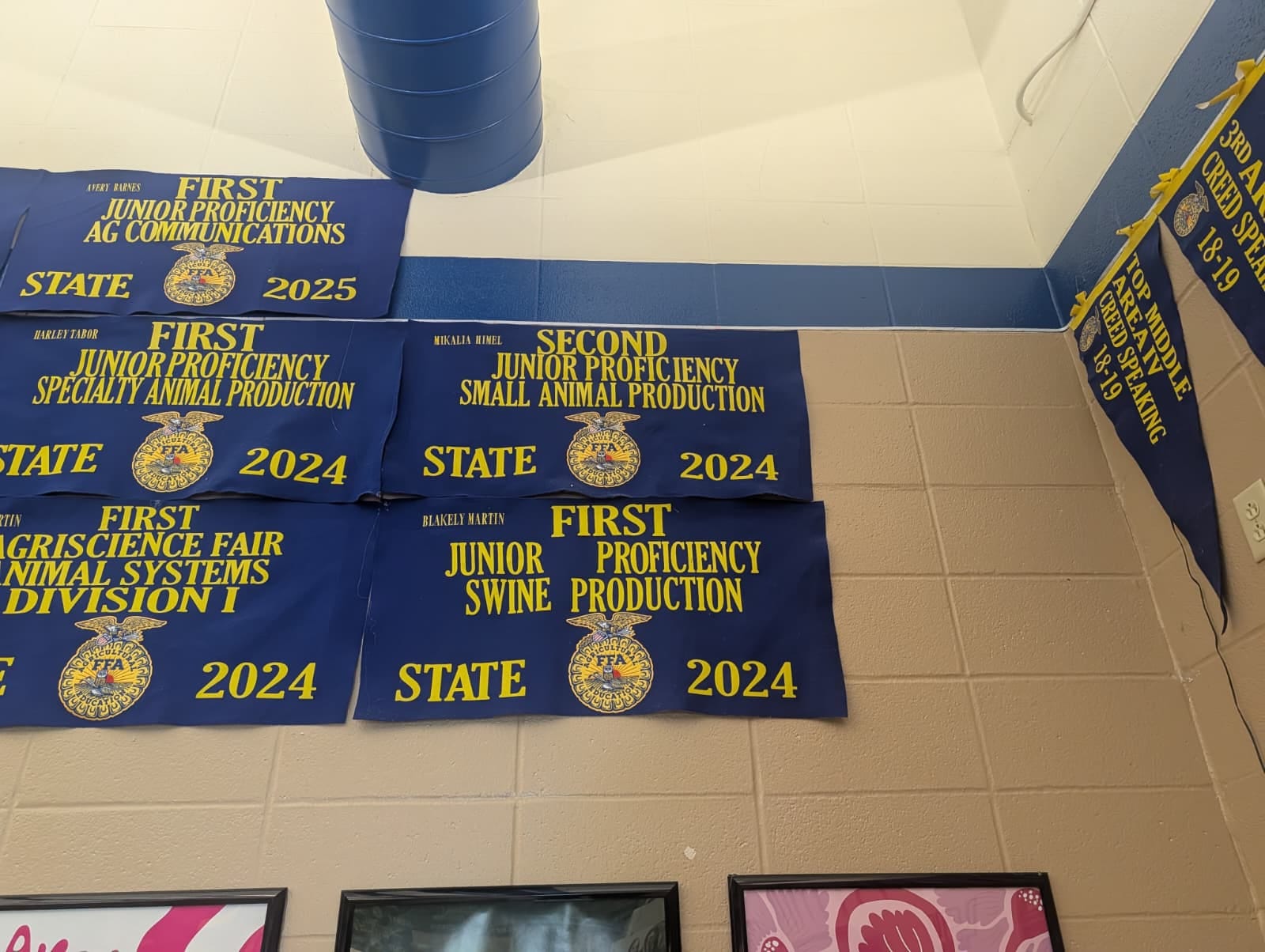
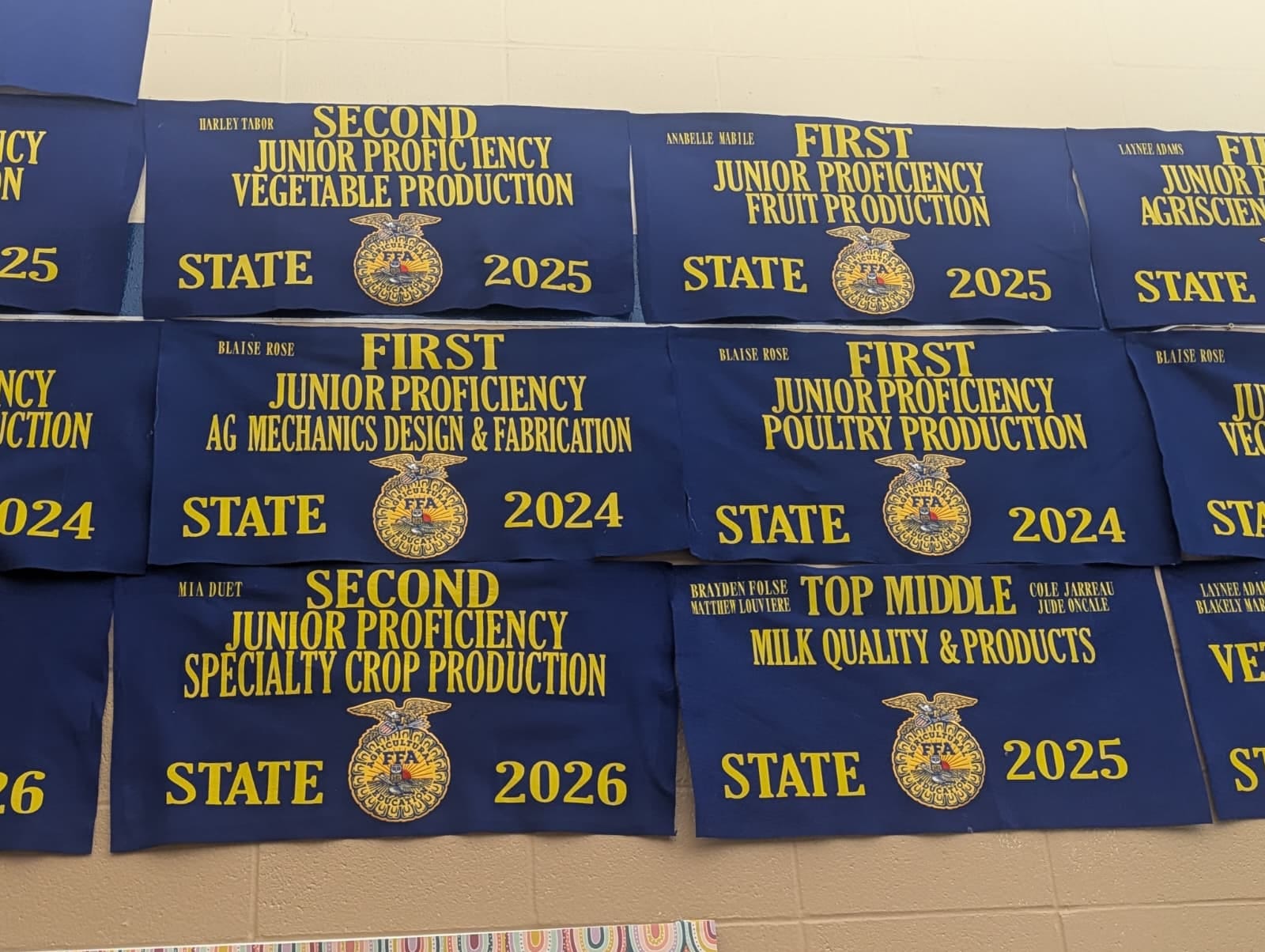
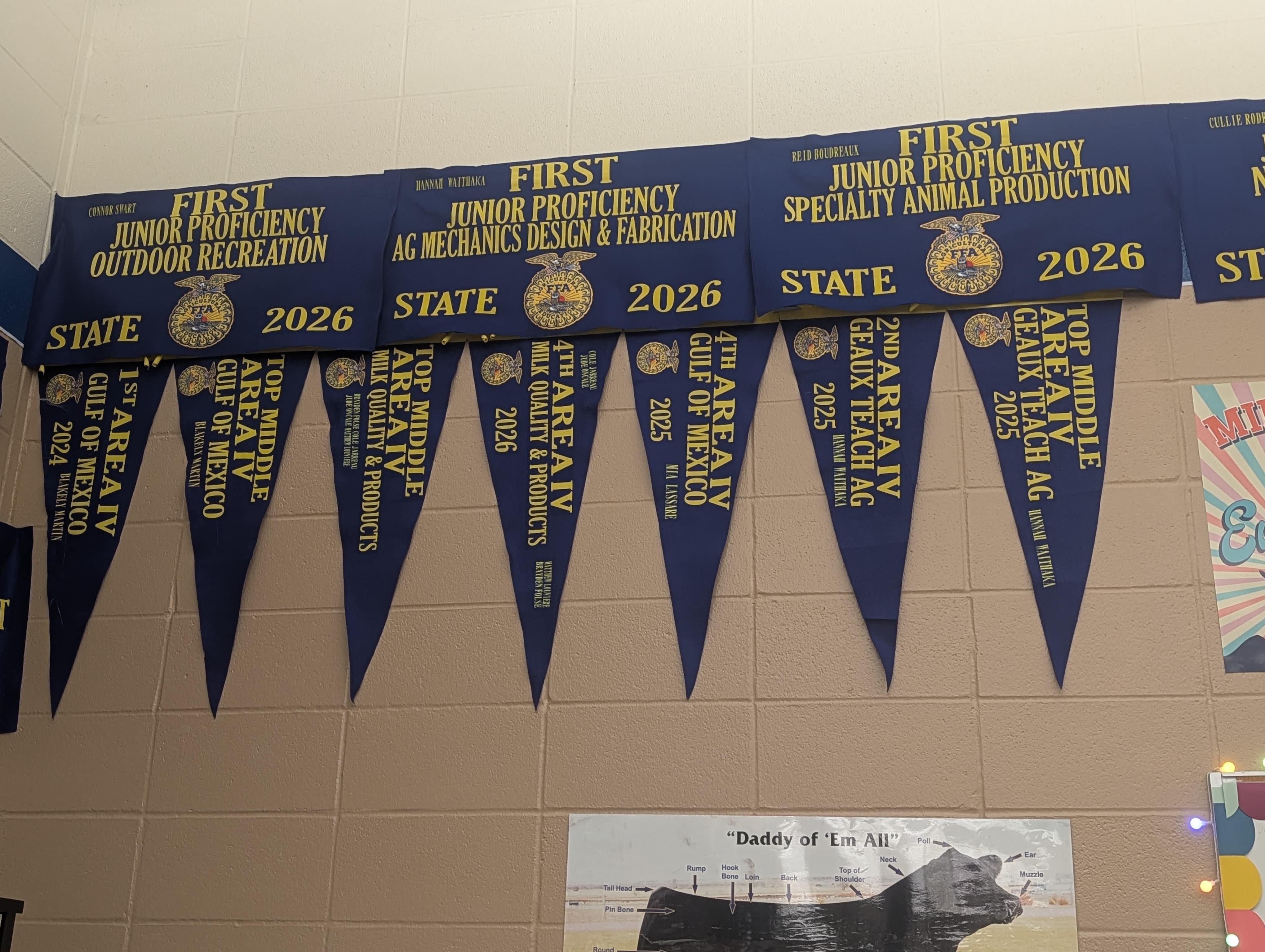
I want to finish by sharing these pictures of awards, which come from a middle school in Louisiana where my cousin is Principal. They represent achievements won by children in 7th and 8th grade,16 who take vocational classes in an ‘elective’ slot, and who are supported to excel at it. To my mind they represent genuine parity of esteem.
Now, Louisiana is coming at this from the opposite direction to us. They may have good vocational options, but their academic performance has been historically woeful.
But over the last few years they have been part of the ‘Southern Surge’ in education - emulating the ‘Mississippi miracle’ next door - which has seen children's academic performance sky-rocket, based on implementation of very similar reforms to those that took place in England: phonics, high standards, a knowledge-rich curriculum. It is transforming educational outcomes.
And if these states can bring academic rigour to their schools without losing their vocational routes, then surely we can do the equivalent: strengthening our vocational offer, without trashing the high quality academic pathways we have successfully created.
Author of Seven Myths About Education, Champion of University Challenge, Doyen of Comparative Judgement, Queen of the Andals, the Rhoynar and the First Men, etc. etc.
Seriously, just read it.
At the time I was working in the Business department on trade and competition policy; my later periods in the Department for Education, as both a civil servant and a SpAd, were primarily focused on post-16 policy.
Lest this be seen as carping from the sidelines, I would like to emphasise that I have nothing but admiration for all those involved in the reforms - politicians, policy makers, teachers, school leaders, writers, organisers and more - and have absolutely no belief I could have done better myself. But if this is our Athelney, then honest reflection has value for all those who hope this to be a set-back, rather than a rout.
Admittedly, for some readers, only the ‘useful’ part of this may be in question!
Dating back to at least Exodus 16.
As we learned over the summer, at Cambridge’s Education Faculty - what one might expect to be the premier seat of education learning - the faculty head has been writing books about ‘Rewilding Education’ and arguing ‘the school system is broken beyond repair’ rather than engaging with what our most successful state schools have been doing.
Some even voted Conservative.
Gove himself never fell into this trap. While committed to ensuring the reforms delivered for the disadvantaged, he spent plenty of time talking about how he wanted state schools to be as good as private schools, or ensuring that Oxbridge entries formed part of school accountability tables - both things speaking directly to middle class aspiration.
One might well criticise reforms that only supported the richer in society. But educational reforms which improve educational performance evenly across the board are a very good thing - even though these wouldn’t change the disadvantaged gap at all!
I’ve been told Labour’s programme was poorly targeted and/or had other flaws. This may be true - I hold no candle for it. But if it was poor, it should have been reformed or replaced, not abolished.
I don’t want to get into the nature or nurture debate here - we can simply observe that, statistically, this is the case. Though we should be clear that this is a population level observation and there will be many individual exceptions - in both directions.
Given I’ve been responding to Daisy a lot in this piece, I should be clear that I don’t think - I think! - that Daisy thinks this. This is about other people.
Lest anyone say this is about ‘other people’s children’, if my own children were on track for 2s and 3s in their GCSEs at 14, I would absolutely want them to have vocational options available to them: 1-2 days a week with an employer or on day release to college, alongside continued, rigorous, study of English and Maths, with maybe 2-3 other subjects. This would be much preferable to having them forced to take, and fail, a solely academic route of 8-9 subjects they didn’t like, weren’t interested in, and wouldn’t pass.
And by this I don’t primarily mean high-level, ‘parity of esteem’ qualifications for really capable kids - T-Levels were designed for this, and they seem to be doing a good job as pretty rigorous qualifications. I mean routes that are designed to be suited to those getting 1s, 2s and 3s at GCSE, which nevertheless offer them worth and validation as human beings, help get them into employment, and show the way to routes that might take them off minimum wage.
Essentially Key Stage 3.
Very interesting. Lots here I agree with! I think the "Exodus 16" point is underrated. I have had a couple of heads make similar points to me recently. A lot of people think "OK we had to do all this stuff to turn the school around but now we've turned it around can't we stop and do something different?"
I absolutely agree and this is one of the most nuanced takes on the subject I have read. The fact that the current dispensation offers so little to the most able has serious implications for the future of public life, which is going to be even more heavily dominated by alumni of elite public schools. Equally the fact that a third of children - thirty per cent! One in three! Ten in a class of thirty!(but not your children or my children) - fail to reach the base standard needs to be waved in the face of anyone who claims that the Gove reforms are an unqualified success. No educational theory would argue for setting children up to fail - and yet we do this to a third of our children. Is it any surprise that they start throwing chairs or not turning up at all?