

2016 was the year that politics changed.
Brexit. Trump’s election. And George Osborne left the Treasury, and the Conservative Party deemed that deficit reduction no longer mattered, yet it was not so.
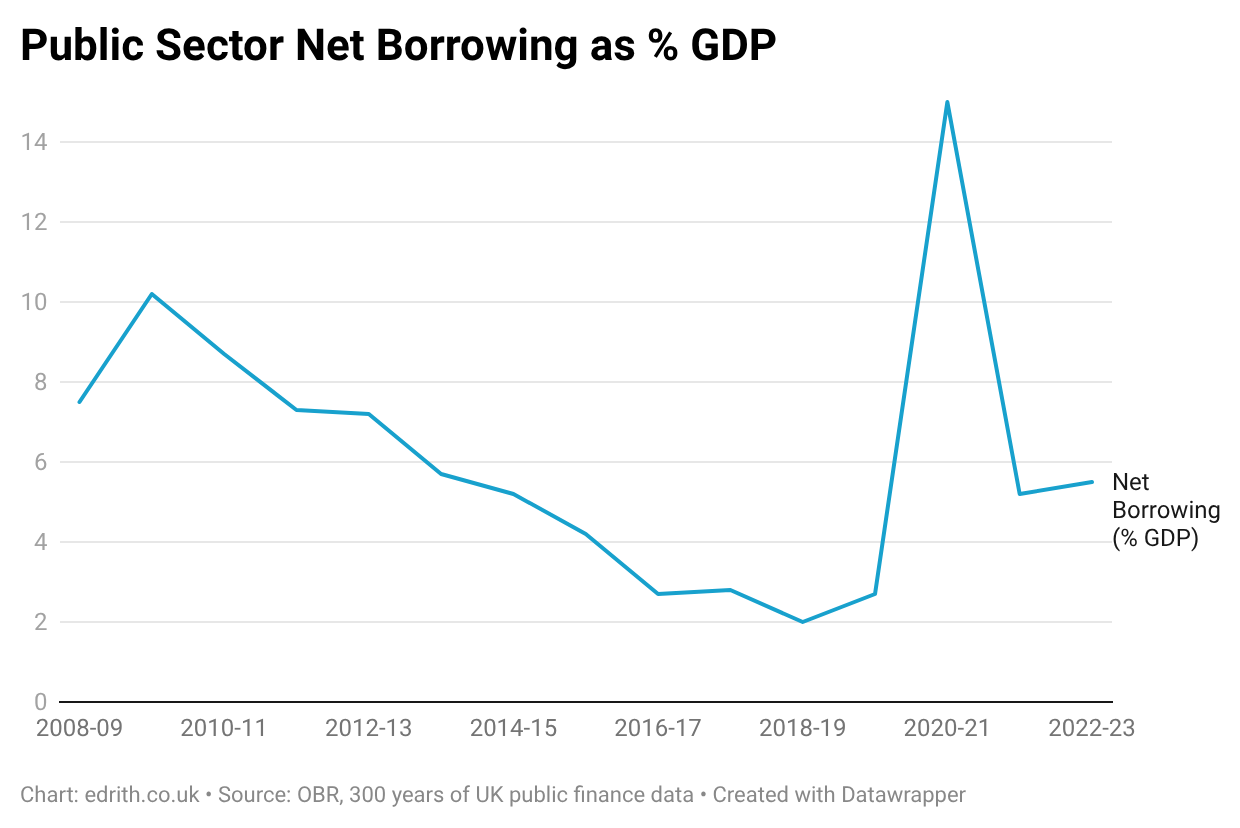
After falling steadily by an average of 1% of GDP each year, the deficit then stalls at between 2 and 3% of GDP, before shooting up during COVID, then falling to a higher level than before.
In addition to the headline budget deficit statistics, we see it in item after item, including the civil service:
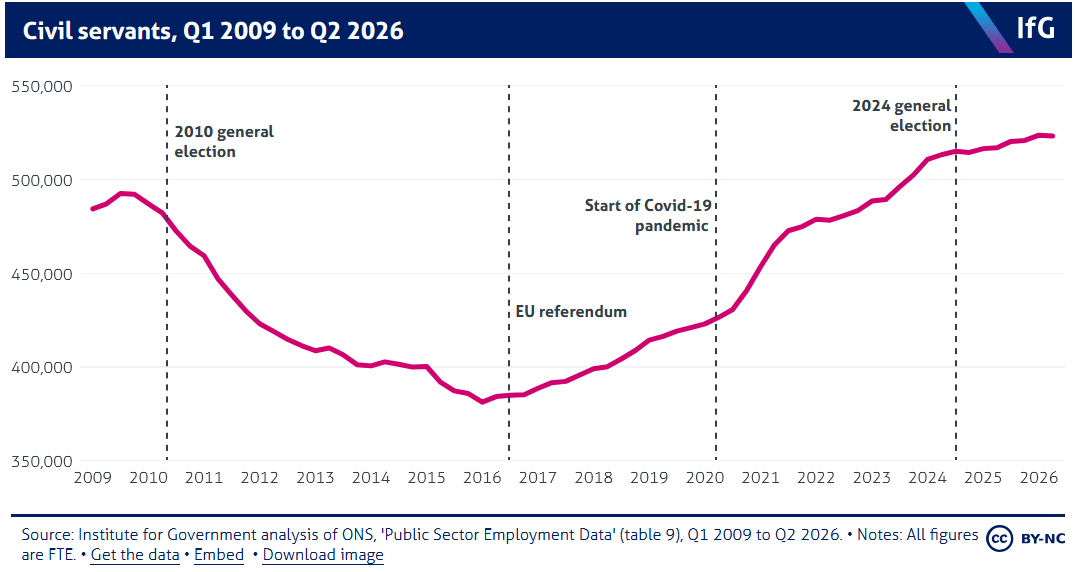
(A common response is to argue we needed more civil servants because of Brexit. Well, the European Commission employs 33,000 officials, so even if we assume that these needed to be replaced 1:1 in the UK,1 we’ve added more than 100,000 FTE civil servants on top of that).
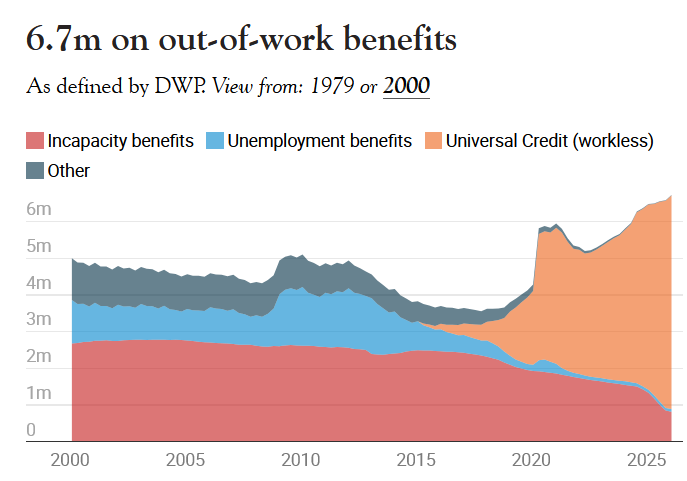
The number of those on out-of-work benefits:
Or spending on Special Educational Needs and Disabilities in schools:
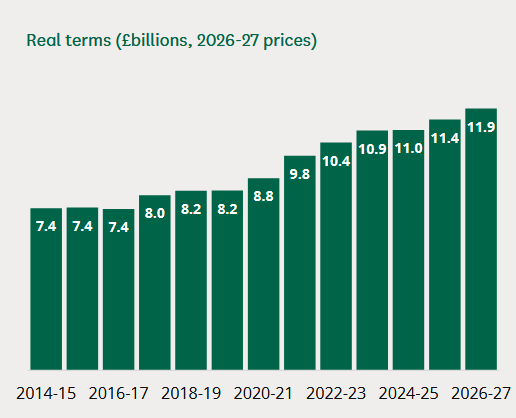
The same pattern can be seen across budget line after budget line.
The sharp-eyed will note that not all of these series begin going upwards in 2016. As Chancellor, Osborne put in place a number of measures - most notably a four-year cash freeze in most working-age benefits2 that took effect from April 2016 - which ensured spending continued to fall slightly (albeit much less quickly) after he left office, with both public spending and the deficit, as shares of GDP, reaching their lowest in 2018-19.
Some of the subsequent rises also had their source in legislation passed during the Coalition period. The Children and Families Act 2014 is typically cited as the primary reason for the subsequent expansion of SEND spending. But the crucial shift remains 2016: from a government committed to deficit reduction to a succession of governments that were not.
Where spending lines rose unexpectedly under these governments, they were permitted to do so, with no corrective action being taken. Where formerly good stewardship resulted in savings, these were almost always recycled into further spending, rather than into deficit reduction or tax cuts. Public spending now stands at a historic high of around 44% of GDP.
We have lived beyond our means, with debt, spending and taxation all rising - through negligence, through weakness, and through our own deliberate fault. Though we are barely richer than we were a decade ago,3 we have invented new ‘needs’ and ‘wants’ on which to spend the money we don’t have.4 To continue in this way is not sustainable.
In the week running up to the Budget, the 2016 gambit begins from a simple premise: that in most areas of public spending there is no reason why government should be spending a penny more than in 2016, after adjusting for age and population.
What might that look like - and how could we get there?